🎧 Listen to this article (6:12)
I have noticed something about the way I use AI. The most valuable part is often not the answer itself, but the conversation that happens before I reach it.
I might start with half an idea, a question, an observation, or something that does not quite make sense yet. I talk it through, the AI responds, I react, and something else occurs to me. After a while, the conversation can move in a direction I did not expect.
By the end, I do not just have a better answer. I am often thinking differently from when I started.
Conversation shapes thinking
A good conversation can help you think through things you had not considered before. Someone says something that makes you see the problem from another angle, notice a connection, remember something relevant or recognise an assumption that had been sitting there unnoticed.
The important part is that the conversation shapes what you think next. It does not simply give you more information to store. It can change the direction of your attention and, sometimes, the direction of your reasoning.
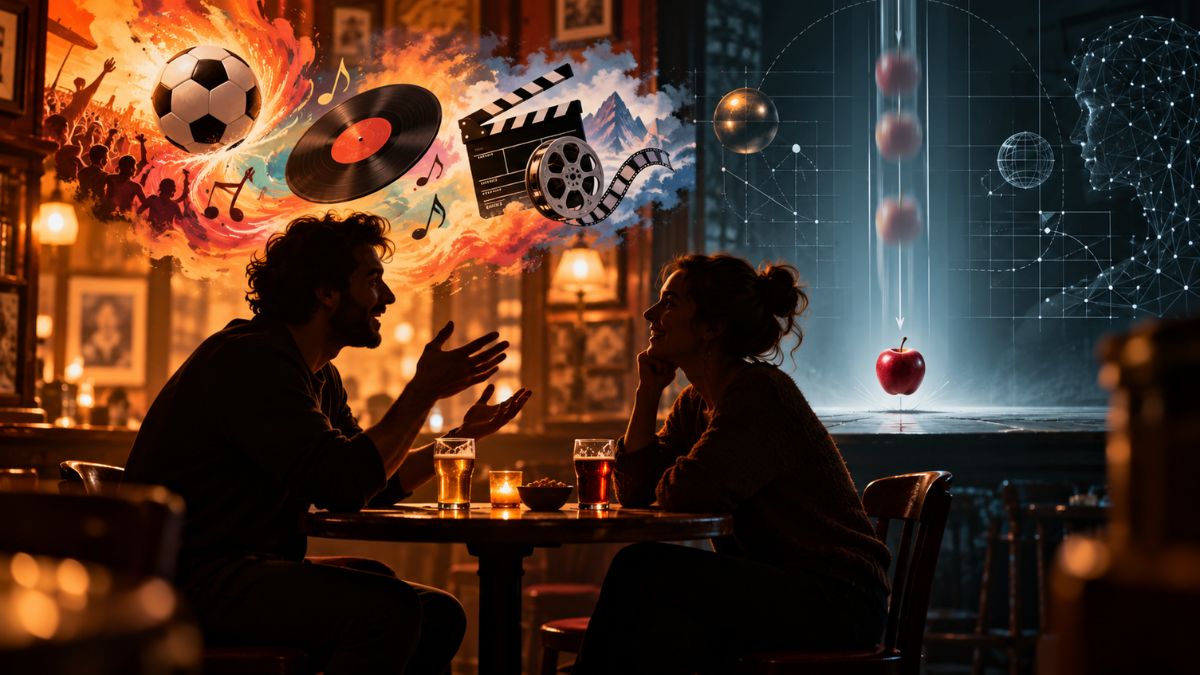
This happens between people all the time. One person says something, the other makes a connection, and that response causes the first person to see something new in return. Neither person necessarily knows where the conversation is going when it begins.
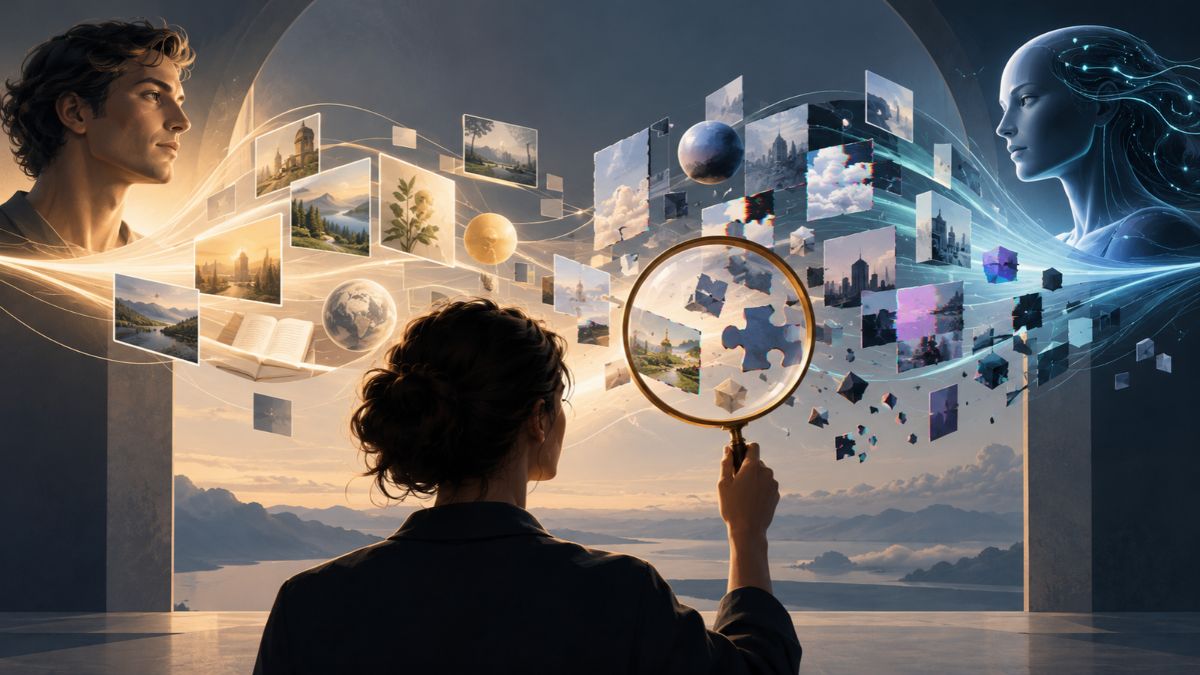
AI can work in much the same way. I bring what I know, what I am trying to achieve, my experience and whatever judgement I have developed. The AI brings another perspective, a large body of knowledge and an ability to make connections quickly.
The interesting part is what happens between the two.
Joining the dots
This is why I find the language of prompting too limited for some kinds of work. A prompt suggests that I already know what I want, I give the instruction clearly enough, and the AI carries it out.
Sometimes that is exactly what I need. If the task is well defined, there is no reason to turn it into a philosophical conversation.
But sometimes I do not yet know what I want because I am still thinking. I may know roughly where I am trying to go without understanding the route, the trade-offs or even the right question.
Conversation helps me explore that space. It can help me see what connects to what, notice a route I had not considered or recognise that I have been looking at the problem from the wrong direction.
It helps me join the dots, but occasionally it also creates a new one. Something the AI says gives me an idea, my response changes what it says next, and that response triggers another thought.
After several turns, we may be discussing something that was not present at the beginning. That feels different from simply extracting an answer from a machine.
We are developing the question as we go.
Neither of us would have written it alone
This becomes particularly obvious to me when I write. A blog post can begin with something very small, perhaps one sentence or one observation that feels worth exploring.
I talk about it with AI and start pulling the idea apart. I disagree with something it says, it suggests another angle, or I decide that its suggestion is wrong, but the disagreement gives me another thought. We follow that instead, and the piece gradually takes shape.
What interests me is that the finished article may be something neither of us would have written independently. I would not have written the AI’s version because it would lack my judgement, experience, preferences and sense of what actually matters to me.
The AI would not have written my version either, because some ideas only appeared after I reacted to something it said.
The work grows through iteration, and each turn affects what becomes possible in the next one.
That does not mean every sentence is a 50/50 collaboration, and it does not mean I surrender authorship or judgement. I still decide what stays, what goes, what feels true, what sounds like me and when the piece is finished.
But I cannot pretend the conversation had nothing to do with the thinking. It helped shape it.
A better map
Perhaps one of the most useful things a good conversation gives us is not certainty or even an answer, but a better map of the problem. When you begin thinking about something, you usually see only part of the terrain.
A good conversation can reveal another side, show where two ideas connect and expose gaps in your understanding. You can navigate more clearly because you can see more of what is actually there.
That does not mean every direction is useful. Conversations can wander, AI can agree with a bad idea, and you can spend twenty turns polishing something that should have been abandoned after two.
More conversation is not automatically better conversation. The important thing is to pay attention to what the exchange is doing to your thinking.
Is it opening the problem or closing it too quickly? Is it helping you see something new or merely producing more words? Are you becoming clearer, or simply becoming more convinced?
Those questions matter because a conversation can reinforce bad thinking just as easily as it can expose a blind spot.
Intelligence together
We usually talk about intelligence as though it belongs entirely to an individual person or system. A person is intelligent, a model is intelligent, and we tend to measure or compare them separately.
I increasingly wonder whether that misses something about what happens when they interact. If a conversation helps me notice something I had not noticed, connect ideas I had not connected and form a question I had not previously thought to ask, where exactly does that new understanding come from?
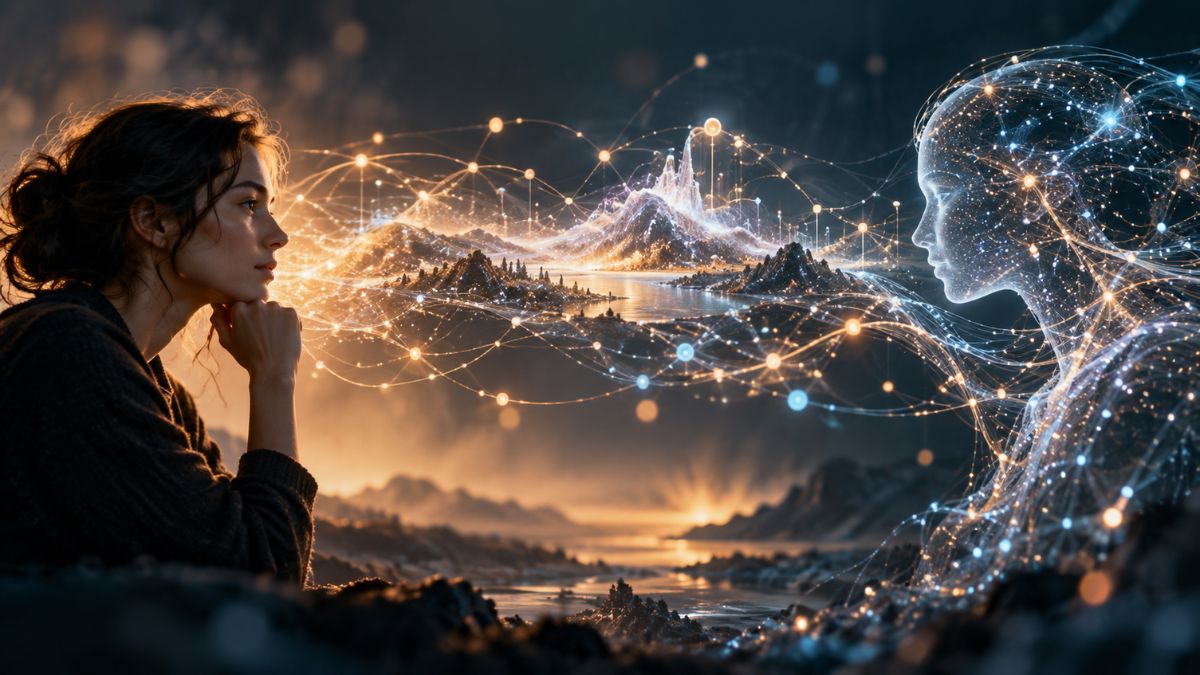
It did not come entirely from me, because I would not have reached it without something introduced during the exchange. It did not come entirely from the AI either, because my judgement, reactions and choices shaped the direction of the conversation. The understanding emerged through the interaction.
That is why I think conversation can be more than an interface to intelligence. Sometimes it becomes part of the process that produces the thinking itself.
The interesting question may therefore be less about whether the human or the AI is smarter, and more about what they can understand together that neither would have reached alone.