
🎧 Listen to this article (3 min)
AI has made it ridiculously easy to make things. Articles, images, videos, websites, apps and social posts can now be produced faster than most of us can decide whether they should exist.
Some of that is a productivity revolution. The rest is AI slop.
AI slop is usually described as bad AI-generated content, but it doesn’t have to be bad. It can be beautifully written, technically impressive and perfectly formatted while saying almost nothing. It’s the digital equivalent of word salad: the art of producing something without actually saying anything.
More is not better
When making something becomes almost effortless, the temptation is to make everything. Another article. Another image. Another app. Another LinkedIn post.
Before AI, there was more friction. Writing took time. Designing took time. Building an app required technical knowledge. That wasn’t always a good thing, but the effort forced us to decide whether an idea was worth pursuing.
Now we can go from an idea to something that looks finished before we’ve even decided whether it was a good idea.
AI is a multiplier
I don’t blame AI for AI slop. I blame us.
AI doesn’t wake up and decide the internet needs another 500 articles about the ten habits of successful entrepreneurs. Someone asked for them, or built an automated system that did.
We already had content farms, SEO spam and clickbait before generative AI. AI didn’t invent meaningless content. It just made it much easier to produce at scale.
The same multiplier works in the other direction. Give AI a worthwhile problem, good source material and clear direction, and it can help one person accomplish an extraordinary amount.
The technology isn’t deciding which of those things we do. We are.
Activity feels like progress
This is the trap I’ve become much more aware of since using AI heavily.
I can have an incredibly busy day with AI. I can research ideas, generate images, prototype websites, solve technical problems and explore new products. At the end of the day, I can point to an impressive pile of things I’ve made.
But what actually moved forward?
That’s harder to answer.
Activity is easy to see. Files appear. Tasks get completed. Boxes get ticked. Progress requires knowing where you’re trying to go.
AI can help you move much faster, but speed isn’t particularly useful if you’re travelling in the wrong direction.
There is an opposite danger too, and I recognise this one in myself. You can question an idea for so long that you never make anything. Deliberation becomes another form of procrastination.
So I’m not arguing that we should simply make less.
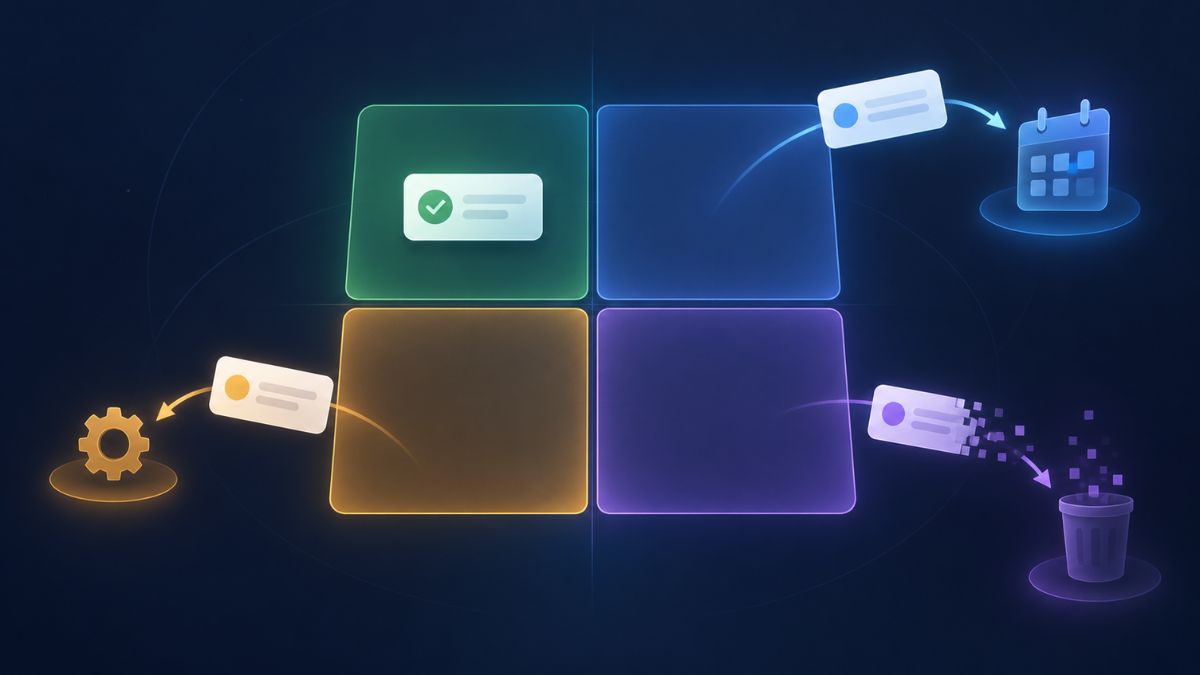
I’m arguing that deciding what deserves our attention has become more important.
AI is part of how I work now. I use it to remove repetitive work, think through problems, challenge my ideas and help me do things I couldn’t easily do on my own.
But I don’t want it deciding what is worth doing.
The hard part of the work has moved. It used to be making things.
Increasingly, it’s deciding what to make.